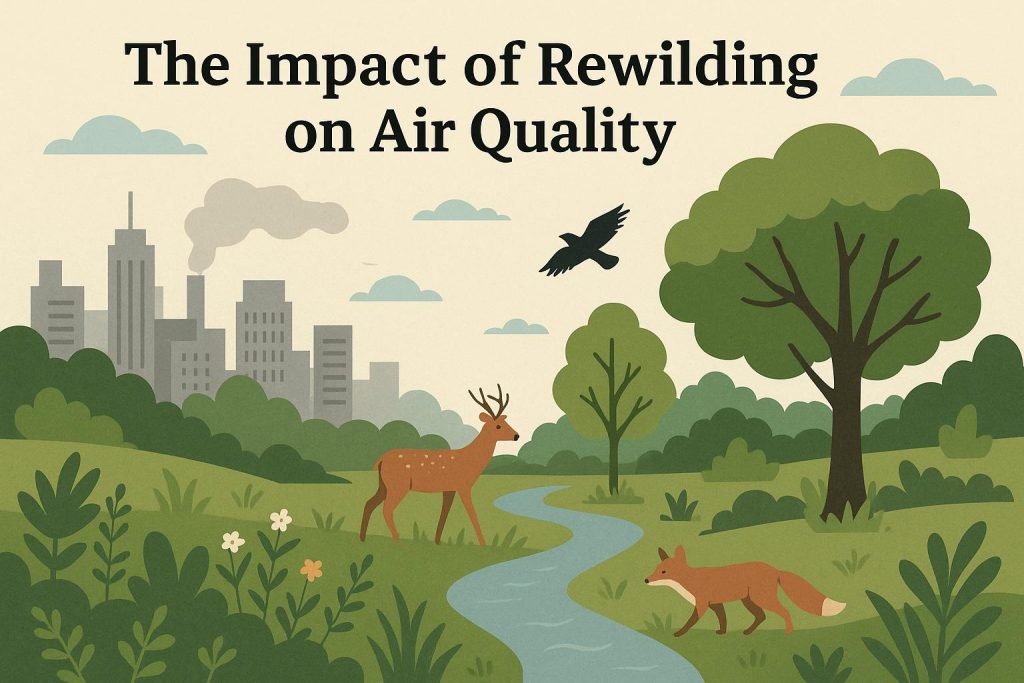
The Impact of Rewildering on Air Quality
The Impact of Rewildering on Air Quality
Rewildering, or rewilding, is an innovative ecological approach aimed at rejuvenating natural ecosystems by allowing nature to take its course in recovering depleted areas. This practice is gaining recognition, not only for its contributions to biodiversity but also due to its substantial positive influence on air quality.
Understanding Rewildering
Rewildering is a holistic process where humans facilitate the reintroduction of native flora and fauna and then step back, permitting natural processes to prevail. This approach often encompasses activities like letting forests grow back to their natural state, restoring the complex ecologies of wetlands, and reviving the dynamic systems of rivers. The overarching objective is to re-establish a harmonious balance within ecosystems by fostering biodiversity and enhancing ecosystem services that have been severely disrupted by human activity over time.
Encroachment and modification of landscapes due to urbanization, industrialization, and agriculture have resulted in significant loss of biodiversity and the degradation of natural habitats. Rewildering seeks to reverse these effects by reinstating nature’s intrinsic resilience and regenerative capabilities, thereby supportively cohabiting with natural environments.
How Rewildering Affects Air Quality
The influence of rewildering on air quality can be profound. Vegetative cover, particularly trees, is fundamentally important in filtering atmospheric pollutants. During the process of photosynthesis, plants absorb carbon dioxide and subsequently release oxygen, an essence of breathable air for all aerobic organisms, thus playing an imperative role in purifying the air. Initiatives centered on increasing forest cover amplify this natural purification process, leading to enhanced air quality.
In addition to the benefits of photosynthesis, vegetation helps in the mechanical trapping of particulate matter—a variety of tiny particles that include dust, soot, and smoke. These particles, when inhaled, can have adverse health effects as they penetrate the respiratory system. By creating extensive natural habitats through rewildering, such pollutants are significantly reduced; vegetation essentially acts as a barrier that intercepts these particles, reducing their presence in the air we breathe.
Carbon Sequestration
An essential component of rewildering pertains to its function as a carbon sink. Natural ecosystems, when restored and allowed to thrive, effectively capture and sequester carbon dioxide, a principal greenhouse gas that contributes to global warming. Forests, grasslands, and wetlands are particularly effective at this sequestration process, playing a pivotal role in reducing atmospheric carbon.
The reduction of carbon in the atmosphere through natural sequestration not only improves air quality on a global scale but also serves as a critical strategy in mitigating the adverse impacts of climate change. By lowering the concentration of greenhouse gases, rewildered landscapes provide a natural buffer against temperature extremes and weather variability associated with climate change.
Aiding Urban Areas
Rewildering is not solely applicable to expansive rural ecosystems; it can also be adapted for urban areas, where it is perhaps even more critically required. Urban rewildering initiatives focus on integrating green spaces within cities through the establishment of green roofs, community gardens, pocket parks, and the rejuvenation of existing urban green belts. These initiatives aid in significantly improving urban air quality by reducing pollution levels.
Furthermore, such urban greening efforts help mitigate the urban heat island effect by lowering temperatures, thereby reducing the energy demand for cooling in buildings and contributing to the overall comfort and health of city environments. As air pollution and heat are intertwined concerns in urban settings, rewildering provides a synergistic solution that addresses both, contributing to sustainable urban development.
Conclusion
Rewildering encompasses a proactive and beneficial ecological strategy that provides significant enhancements to air quality. Beyond simply restoring landscapes, it taps into the earth’s natural systems that inherently purify the air. By enabling these ecosystems to thrive, rewildering offers a sustainable, long-term solution for achieving cleaner air and a healthier environment.
To gain a comprehensive understanding of rewildering, one can explore the wealth of information offered by ecological organizations and government conservation programs. These resources often include detailed case studies and insightful analyses that demonstrate the practical applications and far-reaching benefits of this approach.
In essence, rewildering represents a reconnection with natural processes that not only supports biodiversity but also ensures the continual availability of clean air, making it an indispensable part of modern environmental strategies. While the practice requires patience and a commitment to let nature do its work, the rewards—both immediate and future in terms of air quality—are invaluable.