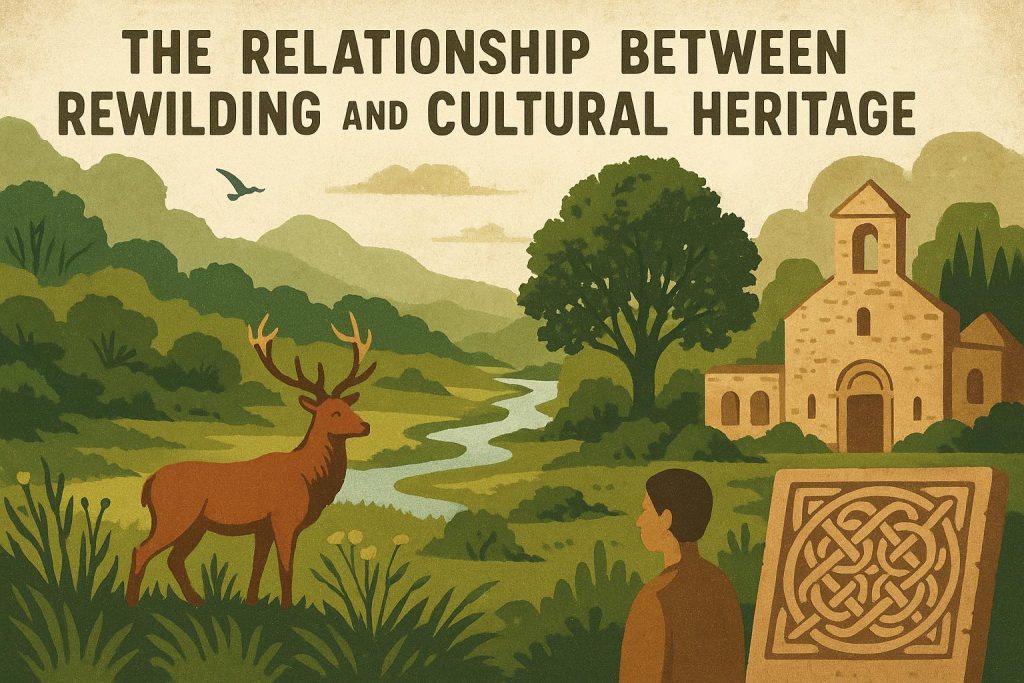
The Relationship Between Rewildering and Cultural Heritage
The Concept of Rewildering
Rewildering, commonly known as rewilding, serves as a pivotal environmental conservation strategy, serving to restore natural processes and wilderness areas. This strategy endeavors to permit landscapes to revert to their natural states, bolstering biodiversity, and minimizing human interventions to the absolute essentials. At the core of this strategy is the reintroduction of indigenous species while concurrently eliminating invasive ones, enhancing the ecosystem’s resilience. This approach underpins the understanding that ecosystems, when left to their own devices, tend to exhibit greater balance and biodiversity.
Cultural Heritage and Nature
Cultural heritage encapsulates the traditions, landmarks, practices, and artifacts that characterize a society’s historical and cultural identity. Historically, human culture and nature have been inextricably linked, as many cultural practices and sites have originated in response to their natural environments. This historical interdependence suggests that the environment forms an integral component of cultural heritage. By acknowledging the interconnectedness of these elements, societies can derive richer meanings from their cultural identities, allowing for a more holistic appreciation of tradition and nature alike. Understanding this linkage aids in recognizing the inherent value present within the landscape, beyond mere aesthetic or recreational purposes.
Intersections of Rewildering and Cultural Heritage
The relationship between rewildering and cultural heritage is simultaneously complementary and, at times, contentious. On one hand, rewildering offers a means to acknowledge and restore the landscape as a dynamic component of cultural heritage. By reintroducing natural elements to a site, communities can honor traditional land uses and the inherent value of natural surroundings that have historically defined cultural identities. Through this lens, the act of restoration becomes an avenue for cultural renewal, allowing past practices and environments to inform and enrich contemporary living.
However, this approach can also be fraught with tensions. The act of rewildering, which often prioritizes ecological imperatives, may not always align seamlessly with cultural preservation goals. Thus, while rewildering can reinforce cultural identity, the process must be navigated with care to avoid eroding other deeply valued cultural expressions. The dialogue between these domains should be managed attentively, ensuring that cultural narratives are neither forgotten nor overshadowed by ecological ambitions.
Challenges and Concerns
Balancing rewildering efforts with the preservation of cultural heritage presents a range of challenges. Some landscapes, significantly altered by human activity over centuries, have evolved into cultural landscapes of historical and social significance. Transforming these spaces purely for ecological purposes could risk erasing crucial elements of cultural history. Therein lies the tension between conserving ecological balance and preserving cultural narratives and landmarks.
Moreover, concerns arise about potential loss of multifunctional landscapes that serve both as cultural sites and productive lands. These areas, rich in historical and economic significance, risk diminished utility and value if transformed exclusively into wilderness. Policies focusing solely on environmental restoration may inadvertently eliminate vital aspects of cultural history embedded in these landscapes.
Therefore, a comprehensive approach that respects cultural significance while advancing ecological restoration is essential to tackling these challenges. An integrated strategy that values both dimensions can work towards ensuring that the benefits of rewildering do not come at the cost of losing cultural richness. The challenges presented by merging cultural and environmental frameworks demand nuanced solutions that uphold both biodiversity and cultural diversity.
The Way Forward
To promote a harmonious relationship between rewildering and cultural heritage, interdisciplinary approaches must be adopted. Engaging local communities in planning and implementation processes proves crucial. By integrating traditional ecological knowledge with contemporary conservation strategies, landscapes preserving both ecological and cultural values can thrive.
Community involvement fosters a participatory process, ensuring the resultant landscapes hold relevance and utility for local stakeholders. Furthermore, incorporating traditional knowledge systems into planning can provide insights into sustainable practices, enhancing the overall efficacy of conservation efforts.
Moreover, legal frameworks are instrumental in guiding balanced rewildering projects. Policies recognizing the inseparability of cultural and natural heritage can steer projects towards sustainable outcomes. By codifying the importance of cultural landscapes within conservation policy, reformations can more accurately reflect diverse societal values and histories.
Furthermore, ongoing research, documentation, and dialogue among stakeholders underpin successful projects. Continuous discourse and study lead to adaptive management strategies, capable of responding to evolving contexts and needs.
In conclusion, rewildering provides an opportunity to bridge the past and the present by restoring landscapes of ecological and cultural significance. Further exploration of the dynamic between nature and culture can foster environments where heritage conservation coexists with ecological resilience. Through committed partnerships and innovative policies, a future where cultural narratives bolster ecological integrity can be forged, ensuring a legacy of continuity and balance for subsequent generations.