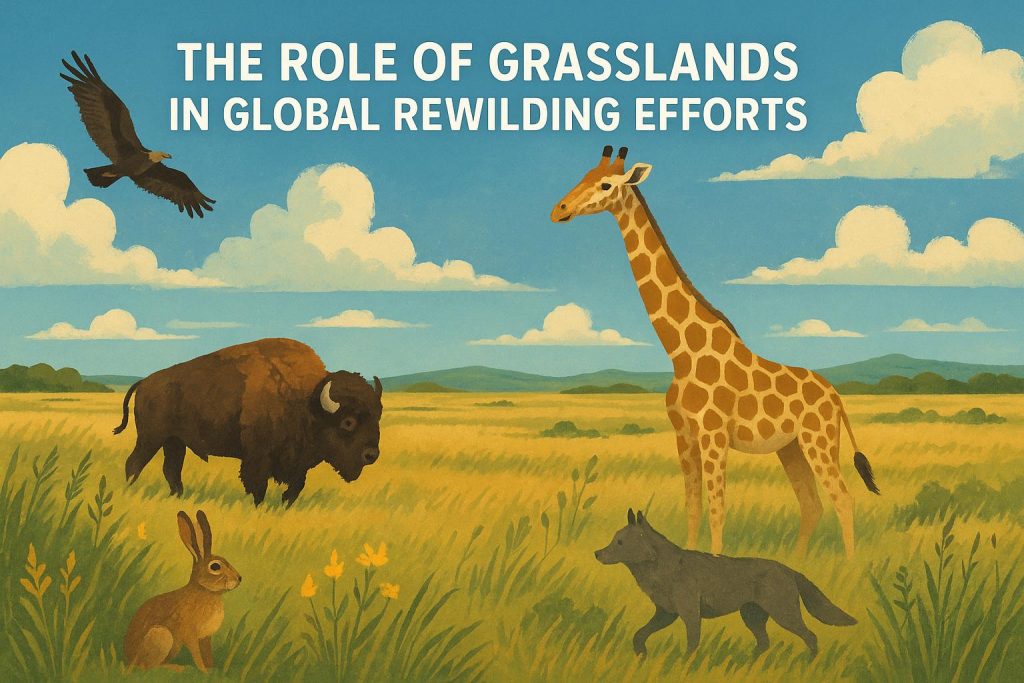
The Role of Grasslands in Global Rewildering Efforts
The Importance of Grasslands in Rewildering
Grasslands cover approximately 40% of the Earth’s land surface and represent vital ecosystems that support a vast array of biodiversity. As global rewildering efforts gain momentum, understanding the role grasslands play becomes increasingly crucial. These ecosystems offer not only habitat for numerous species but also contribute significantly to carbon sequestration, water regulation, and soil health.
Grasslands and Biodiversity
Grasslands serve as a habitat to a wide range of plant and animal species. They are home to various mammals, insects, and birds, many of which have uniquely adapted to thrive in these environments. The preservation and restoration of grasslands are imperative for bolstering biodiversity, as these ecosystems provide refuge and resources to many threatened species. One of the key aspects of rewildering projects is the reintroduction of native species. Such efforts help restore natural balances and promote resilience against climate change, ensuring ecosystems remain robust and sustainable.
From a biodiversity perspective, grasslands play an integral role in maintaining ecological balance. Many species rely on grasslands as their primary habitat. These areas serve as a feeding and breeding ground for large herbivores, predators, and myriad smaller species. The complex interactions within these ecosystems, if maintained, contribute to the intricate web of life that sustains ecological health.
Carbon Sequestration Potential
One of the most significant environmental benefits of grasslands is their ability to sequester carbon. It is estimated that grasslands store approximately 34% of the global terrestrial carbon. The plant roots and soil within these ecosystems play an essential role in capturing carbon dioxide, making them invaluable in efforts to mitigate climate change. Through photosynthesis, grasses pull carbon dioxide from the atmosphere and store it in their biomass and the soil, acting as natural carbon sinks.
Protecting and restoring grasslands can enhance their capacity to serve as these carbon sinks, offering a natural solution to part of the climate puzzle. The enhancement of this function can be achieved by promoting practices that prevent overgrazing, land conversion, and other disruptive activities. By ensuring grasslands remain intact and functional, we can effectively leverage their carbon sequestration potential to mitigate atmospheric carbon levels.
Water Regulation and Soil Health
Grasslands contribute significantly to critical ecological services such as water regulation and soil health. The extensive root systems of grassland plants help maintain soil structure, reduce erosion, and enhance water infiltration. These processes improve groundwater recharge and stabilize regional hydrology, offering essential benefits for agricultural practices and the availability of freshwater resources.
The intricate root networks in grasslands bind the soil, which minimizes erosion by wind and water. This stability is crucial not only for the integrity of the ecosystem itself but also for surrounding agricultural lands that benefit from reduced soil erosion and increased soil fertility. Additionally, the ability of grasslands to enhance water infiltration is vital in maintaining aquifers and natural waterways, especially in arid regions where water is a precious resource.
Challenges and Opportunities
Despite their importance, grasslands face numerous threats, including agriculture expansion, urban development, and climate change. These factors lead to habitat fragmentation and degradation, which can decrease biodiversity and disrupt essential ecosystem services. As human activities encroach upon these ecosystems, the delicate balance that sustains grassland biodiversity is jeopardized.
However, opportunities for conservation and restoration abound. Initiatives such as sustainable grazing practices, targeted land management policies, and educational programs are on the rise. These approaches promote the protection of grasslands, ensuring they can continue to provide ecosystem services and maintain their ecological roles. Sustainable grazing practices, for example, can prevent overgrazing, allowing plant communities to recover, thus enhancing soil and water conservation functions.
Targeted land management policies can be tailored to encourage practices that protect and restore grasslands. Governments and environmental organizations can develop guidelines and incentives for preserving these ecosystems, fostering a culture of conservation and sustainable land use.
Educational programs are essential for raising awareness about the value of grasslands and the need for their conservation. By informing communities and stakeholders about the benefits of grasslands, it is possible to cultivate a broader understanding and appreciation of these ecosystems, driving communal and individual initiatives toward their preservation.
Grasslands play a pivotal role in global rewildering efforts, providing multiple ecological and environmental benefits. Through careful restoration and dedicated conservation efforts, these critical ecosystems can continue to support biodiversity, combat climate change, and maintain essential ecosystem services. For anyone seeking detailed information about specific rewildering initiatives involving grasslands, resources such as the Rewilding Institute and Rewilding Europe offer valuable insights and guidance.
Understanding the dynamics of grasslands and their conservation allows these ecosystems to remain a cornerstone in efforts that address environmental concerns globally. Therefore, it is imperative to prioritize and invest in the protection and restoration of grasslands, securing their benefits for current and future generations.