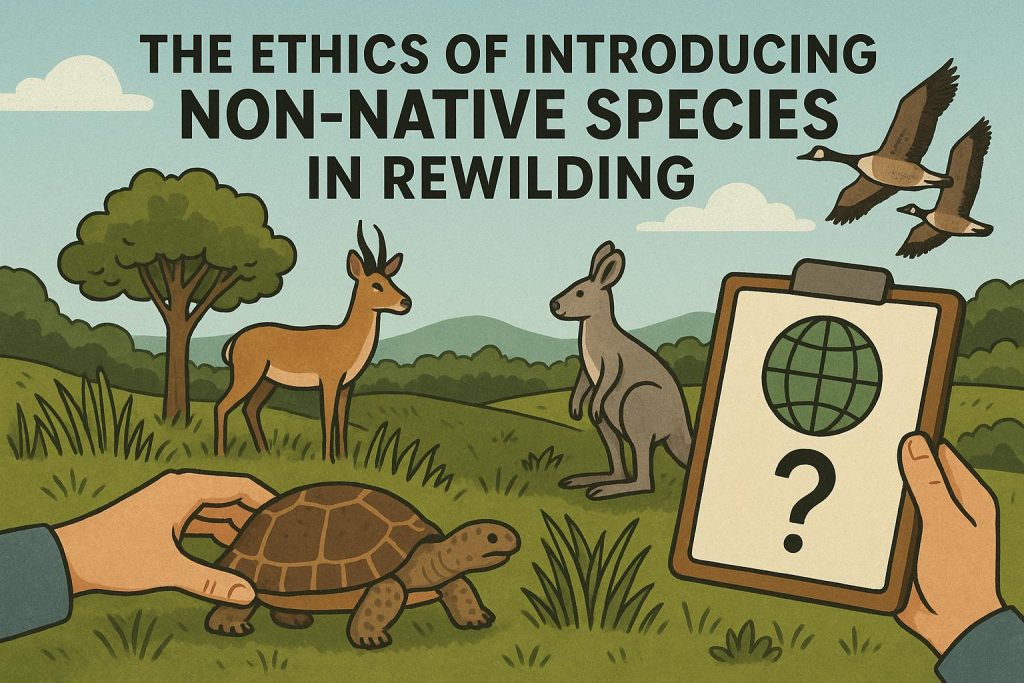
The Ethics of Introducing Non-Native Species in Rewildering
The Ethics of Introducing Non-Native Species in Rewilding
The practice of rewilding involves restoring and protecting wilderness areas and returning ecosystems to their natural state. One of the contentious issues in rewilding efforts is the introduction of non-native species. This approach raises several ethical considerations that merit careful examination.
Ecological Balance and Biodiversity
Rewilding aims to restore ecological balance and biodiversity to degraded ecosystems. In some situations, this may involve introducing non-native species, especially when native species have been lost due to human activities. For example, in ecosystems where apex predators have been extirpated, introducing a similar non-native species could help restore trophic levels and ecological roles that have been missing.
However, the introduction of non-native species poses significant risks. These species may become invasive, leading to a displacement of native species and potentially causing their extinction. When introduced species become invasive, they can alter habitat structures, nutrient cycling, and other ecosystem functions. The difficulty lies in predicting the behavior of non-native species in new environments, making ecological balance an uncertain and challenging goal.
Invasive Species Concerns: While not every introduced species becomes invasive, those that do can cause severe disruptions. The introduction of invasive species can lead to the decline of native populations and the homogenization of biodiversity. For instance, the introduction of a non-native plant species might overrun local flora and alter soil composition, thereby impacting the entire ecosystem. The cascading effects of such changes can be profound, and reversing these impacts can be difficult, if not impossible.
Thorough assessments of whether a non-native species might become invasive are integral to decision-making. These assessments should include thorough ecological studies, predictive modeling, and an evaluation of the species’ history of invasiveness in other environments.
Ethical Responsibility
The introduction of non-native species as a tool in rewilding initiatives involves substantial ethical responsibility. Conservationists and policymakers must weigh the potential benefits against the risks and uncertainties involved. They need to consider whether introducing a non-native species aligns with the ethical principle of minimizing harm to the environment.
Ethical Decision-Making Frameworks: Using structured ethical decision-making frameworks can aid in the evaluation process. These frameworks should include comprehensive risk assessments to understand the potential environmental impacts of introducing non-native species. Decision-makers should engage in interdisciplinary approaches, combining ecological, social, and ethical perspectives.
Furthermore, considering alternative conservation strategies that do not involve introducing non-native species is crucial. Such strategies might include habitat restoration, increasing connectivity between fragmented habitats, or enhancing the resilience of current native species populations.
Cultural and Social Considerations
The cultural and social dimensions of introducing non-native species in rewilding projects are significant. Some ecosystems are deeply connected to the cultural identity and heritage of local and indigenous communities. These groups may have traditional knowledge and historical ties to the landscape that are invaluable in understanding the ecological and cultural ramifications of introducing new species.
Community Engagement: Successful rewilding efforts should involve local communities and stakeholders in every stage of the planning and implementation process. By engaging communities in meaningful dialogue, conservationists can build trust and gain insights that may influence decision-making. Local ecological knowledge can greatly contribute to understanding the potential impacts of introducing non-native species.
Community engagement also ensures that rewilding efforts align with the values and needs of those who are most directly affected by these initiatives. Effective engagement can enhance the success and sustainability of conservation outcomes, as local communities are more likely to support initiatives that they have helped shape.
Future Directions
The future of rewilding initiatives involving non-native species depends on ongoing research, monitoring, and adaptable management practices. Continuous monitoring is essential to observe the impacts of introduced species on ecosystems and to adapt management strategies accordingly.
Adaptive management strategies are critical in responding to new information and developing methods to mitigate any negative effects that arise. This approach allows conservationists to be flexible and responsive to changes in ecological conditions and species interactions.
Further research into the long-term impacts of non-native species introductions can help refine rewilding strategies. Investigating the ecological roles of these species, their interactions within ecosystems, and the potential for becoming invasive will inform future decisions.
For more information on rewilding initiatives, consider exploring resources from organizations such as Rewilding Europe or the Rewilding Britain.
In conclusion, the decision to introduce non-native species in rewilding should be approached with caution, ethical consideration, and a commitment to preserving biodiversity and ecological balance. Conservationists, policymakers, and communities must work together to ensure that these decisions benefit both nature and people, integrating scientific understanding with ethical responsibility.