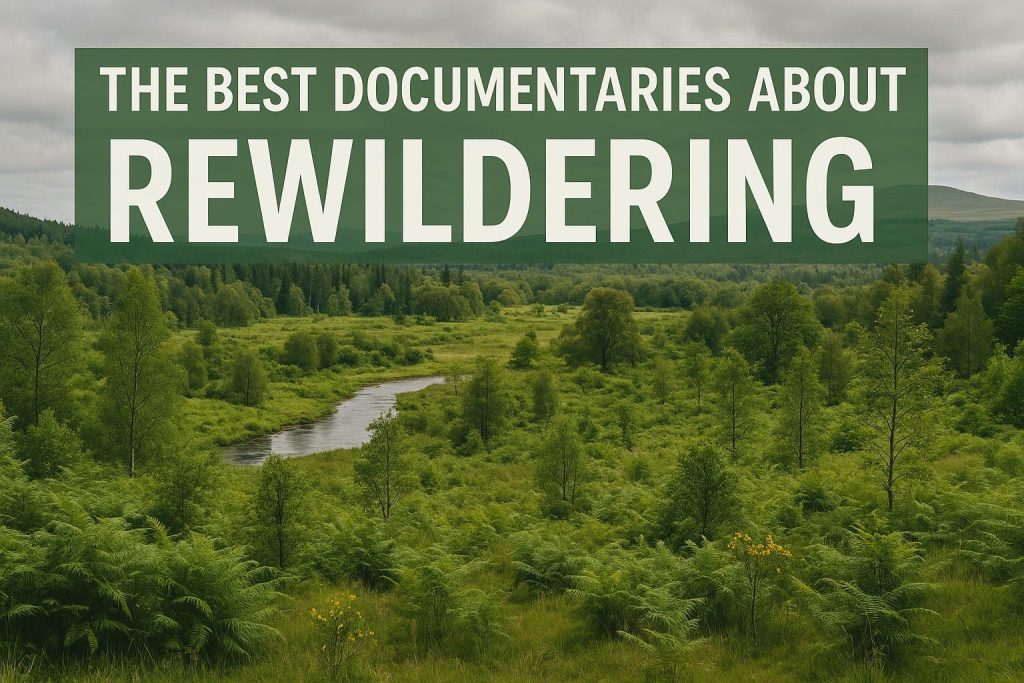
The Best Documentaries About Rewildering
Introduction to Rewildering
Rewildering, interchangeably referred to as rewilding, constitutes a pioneering conservation strategy that pursues the revitalization or re-establishment of ecosystems to their primal, self-regulating states. This approach underscores the significance of reintroducing indigenous species while permitting natural processes to unfold with minimal human interference. Through rewilding, the emphasis is placed on not only augmenting biodiversity but also fortifying ecosystem resilience and health. A vibrant way in which the successes and complexities of this conservation practice are communicated to the public is through documentaries. These films serve as potent visual narratives that unravel the exciting and challenging narratives of rewilding efforts worldwide. In the following sections, we delve deeper into a selection of notable documentaries that offer a lens into the practice of rewilding.
Rewilding Europe
Rewilding Europe emerges as a compelling documentary that is part of a broader project focusing intently on restoring and cultivating wild spaces across the European continent. This film gives audiences a front-row seat to the active endeavors taken to reintroduce species such as the European bison and lynx back into their indigenous habitats. This is not merely a tale of animals returning; it is a chronicle of symbiosis being reinstated. By weaving through various rewilding projects, the documentary fabricates a rich tapestry that illuminates how human-driven conservation initiatives can potentially resuscitate watershed ecosystems. Prioritizing the revitalization of landscapes envisions a future where natural processes are the driving force in land management—a fundamental principle in the theory and practice of rewilding.
The National Parks: America’s Best Idea
While essentially not solely dedicated to rewilding, The National Parks: America’s Best Idea, helmed by acclaimed director Ken Burns, provides a wider contextual framework on the story of conservation in America. This illustrious documentary series traces the lineage of the U.S. national parks, serving as testament to the imperative of preservation and the historical underpinnings of the rewilding philosophy. By visiting the stories that breathe life into these protected areas, the series subtly illustrates how rewilding efforts could nourish and invigorate these treasured natural sanctuaries. The concept of protected areas dovetails with the ethos of rewilding, whereby allowing ecosystems the space and time to evolve with minimal human intrusion can yield landscape-scale ecological benefits, thus pivotal in maintaining these havens.
Wild Yellowstone
Wild Yellowstone delves into one of the most quintessential and well-documented rewilding efforts: the quintessential reintroduction of the wolf to Yellowstone National Park. This documentary becomes more than just a cinematic experience; it transforms into an educational journey elucidating the profound impact that the return of gray wolves has had on the park’s intricate ecosystem. By exploring the concept of trophic cascades, it effectively underscores how the presence of top-level predators can architecturally and dynamically reform entire ecosystems. Wolves, as apex predators, are shown to reshape not just ecological communities but also the landscape itself, a key concept that forms the backbone of rewilding thought and practice. The film thus becomes a didactic narrative on why apex species are linchpins to maintaining ecological balances.
Rewilding: Britain’s Big Night Out
This captivating film, Rewilding: Britain’s Big Night Out, centers the narrative on the rewilding endeavors in the UK, bringing to light initiatives and efforts to rejuvenate wild landscapes in specific parts of Britain. It takes the viewer on a visual journey through numerous ambitious projects that aim to reintroduce indigenous species and restore the environmental equilibrium across varying terrains. By doing so, it encourages a paradigm shift in how land is perceived and managed. The film advocates for the recognition of the intrinsic value of wild landscapes, underscoring the importance of ecological restoration in transforming how we engage with the natural world. This aligns with the broader goals of rewilding to foster sustainable interactions with our environment.
The Serengeti Rules
The Serengeti Rules serves as an insightful exploration into understanding the scientific principles underlying ecosystem regulation, introducing viewers to key concepts integral to rewilding. The documentary traces groundbreaking discoveries by scientists who revealed how a select few species possess a disproportionate influence on the health and functionality of ecosystems, commonly known as keystone species. This film navigates through diverse landscapes and ecosystems, highlighting the monumental outcomes of maintaining ecological equilibrium. By focusing on how keystone species govern ecosystem processes, the documentary aligns its narrative with rewilding philosophies that emphasize the restoration of natural order and ecological dynamics.
Conclusion
These documentaries collectively offer multi-faceted insights into the world of rewilding as seen through divergent perspectives and global contexts. Each of these films contributes uniquely to a nuanced comprehension of how rewilding forms a vital component of the broader ambit of conservation strategies geared towards the recovery of biodiversity and ecosystem restoration around the globe. It is through the vivid portrayal of real-world applications and factual chronicles that these documentaries inspire audiences to develop an eager interest in the potential and promise of rewilding as a tool for ecological renewal. The efforts illustrated in these films highlight both the triumphs and challenges associated with rewilding, rendering a beacon for future conservation endeavors that prioritize ecological integrity over anthropogenic influences. The visual storytelling inherent in these documentaries not only informs but also energizes ongoing dialogues and initiatives in the field of conservation, reinforcing the significance of rewilding in our collective effort to heal and nurture the natural world.