Rewildering and the Connection to Permaculture
Understanding Rewildering and Permaculture
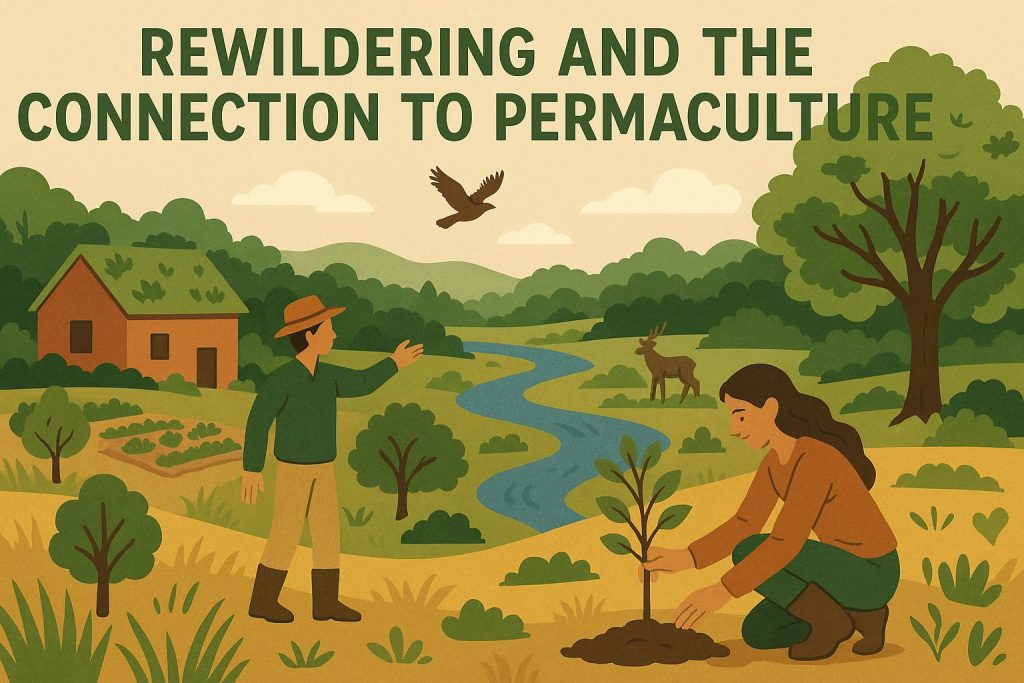
Rewildering and permaculture are interconnected approaches that encourage biodiversity and sustainable living. Both methodologies aim to restore natural ecosystems and promote environmental health. It is essential to understand their individual roles and how they complement each other.
What is Rewildering?
Rewildering refers to the process of restoring an area to its natural, wild state. The approach focuses on reintroducing native species and allowing nature to recover its own balance without human interference. The concept is predicated on the belief that ecosystems have evolved over millennia to function optimally and that by returning them to their natural state, they can achieve a high level of biodiversity and resilience.
Reintroduction of native flora and fauna: Rewildering involves identifying and reintroducing species that are native to the region. This could include plants, insects, mammals, birds, and other wildlife that historically inhabited the area. By doing so, the natural food webs and ecological interactions can be restored, enhancing ecosystem services and biodiversity.
Allowing ecosystems to evolve naturally: Unlike traditional conservation efforts that might involve significant human intervention, rewildering focuses on minimal interference. The idea is to create conditions where ecosystems can evolve naturally, following their own ecological trajectories without being overly managed by humans.
Minimal human management and intervention: In rewildering, the role of humans is largely observational and supportive, intervening only when necessary to facilitate the initial stages of ecological restoration. This could involve removing invasive species that threaten native biodiversity but generally avoids ongoing management.
The practice is gaining popularity as a way to combat biodiversity loss and improve environmental resilience. For more detailed insights into rewildering, explore this comprehensive guide.
Permaculture: A Sustainable Design Philosophy
Permaculture is a design system that mirrors natural ecosystems to create sustainable human environments. The principles involve careful observation of natural patterns and applying them to food production and land use. Core principles include:
Working with nature: Permaculture is based on the idea of emulating nature’s own design. Instead of working against natural processes, permaculture proponents seek to understand and harness them, creating systems where every element serves multiple functions and works synergistically with others.
Self-sustainability: The aim of permaculture is to develop systems that require minimal external inputs. By designing regenerative agricultural systems where waste is recycled, energy is efficiently captured and reused, and water is managed effectively, these systems become more self-sufficient and less reliant on outside resources.
Resource management: Efficient and responsible use of resources is a cornerstone of permaculture design. This involves not only minimizing waste and maximizing resource use but also using renewable resources and designing landscapes in ways that conserve both human and natural energy.
Permaculture techniques integrate water management, soil health, and energy-efficient design to ensure sustainability. For more on permaculture principles, visit this resource.
The Symbiotic Relationship
Rewildering and permaculture share common goals of enhancing biodiversity and sustainable resource management. Though distinct in their methods and applications, they complement each other in several ways:
Complementary approaches: Permaculture can serve as an entry point for rewildering projects. By initially stabilizing an area with permaculture’s intentional design and planting, ecological succession can be promoted. As systems mature, they can transition toward a more wild state, embodying the principles of rewilding as human input is reduced.
Phased integration: Both methodologies can be seen as steps in a continuum toward ecological health. Areas initially designed under permaculture principles can transition over time into rewilded ecosystems. During this process, human management gradually decreases, allowing nature to take its course toward greater complexity and resilience.
Case Studies and Application
The success of combining rewildering and permaculture is demonstrated in several projects worldwide. The Knepp Estate in the UK serves as a notable example where rewildering has spurred a remarkable resurgence in biodiversity. This is achieved alongside permaculture techniques that maintain agricultural productivity in sustainable harmony.
Another example reflects urban contexts where concepts of permaculture and rewilding converge. Urban permaculture efforts integrate aspects of rewilding by repurposing spaces within cities to serve as green areas, offering environmental benefits and creating spaces where native species can return and thrive.
These cases highlight the flexibility of both methodologies and their application across different landscapes—rural, urban, or suburban. The implementation of permaculture and rewildering varies based on local contexts and environmental challenges, showcasing the potential to revitalize degraded areas into thriving ecosystems.
To explore more case studies and project implementations, check this site.
Conclusion
Rewildering and permaculture represent vital components of the move towards sustainable ecological practices. By understanding and applying their principles, we can create environments that are both productive and harmonious with the natural world. This involves rethinking how humans interact with landscapes, incorporating regenerative practices, and recognizing the potential in allowing natural processes to guide ecological recovery. As the global community continues to face pressing environmental challenges, the integration of rewildering and permaculture offers pathways to build resilience and sustainability, ultimately paving the way for a more balanced ecological future.