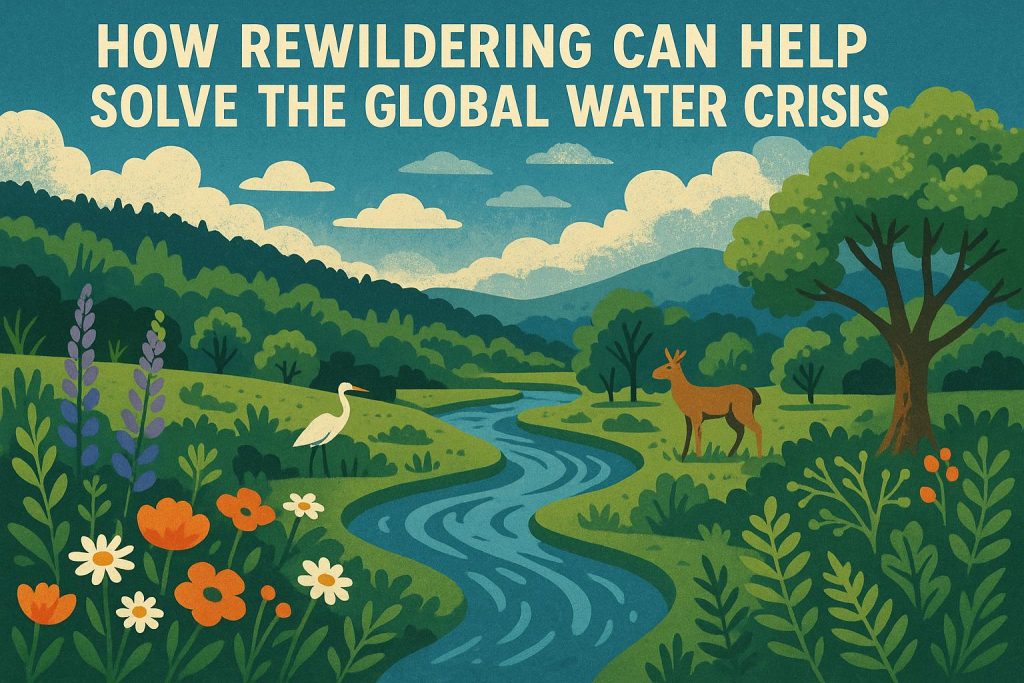
How Rewildering Can Help Solve the Global Water Crisis
Understanding Rewildering
Rewildering is a strategy for environmental conservation that seeks to reconstruct ecosystems, bringing them back to their naturally found, uncultivated conditions. This extensive process involves various initiatives such as the reintroduction of native species, removal of non-native invasive species, and a significant reduction or complete cessation of human interventions in land management practices that interrupt natural processes. The broad aim of rewildering is the recovery and enhancement of biodiversity and restoring ecological functions of the land—ital parts of a healthy ecosystem. By promoting these processes, rewildering offers a variety of benefits, some of which address critical issues like water scarcity.
The Relationship Between Ecosystems and Water Cycles
Natural ecosystems are crucial to the regulation of the hydrological cycle, which is also referred to as the water cycle. Vegetation within these ecosystems greatly influences how water is absorbed into and retained in the soil, which directly enhances groundwater recharge. Forest ecosystems specifically are often compared to natural sponges due to their capacity to absorb rainfall effectively and release it slowly into water bodies like rivers and streams. This gradual release plays an essential role in maintaining water availability, especially during periods without precipitation. As ecosystems are allowed to function without substantial human disturbance through rewildering, these intrinsic water-regulating processes can be enhanced significantly.
Examples of Rewildering in Action
One of the most prominent examples of rewildering is the ecological restoration undertaken in Yellowstone National Park in the United States. A pivotal change occurred with the reintroduction of wolves into the park in 1995, which acted as a catalyst for a series of ecological changes known as a trophic cascade. The presence of wolves altered the grazing patterns of herbivores like elk, which led to the recovery of vegetation along riverbanks. This recovery in turn had a positive impact on water quality and significantly reduced erosion of the riverbanks. Such changes reflect broad ecological improvements resulting from targeted rewildering efforts.
In Europe, several rewildering projects have centered around river and wetland restoration. For instance, the restoration project of the River Waal in the Netherlands is designed to increase the capacity of floodplains for water storage. These enlarged floodplains help in reducing the risk of flooding while simultaneously improving the river’s biodiversity.
Reducing Water Scarcity Through Rewildering
Rewildering has the potential to play a noteworthy role in mitigating water scarcity through several mechanisms:
Improving Water Quality: Native vegetation acts as a natural filter, removing pollutants and enhancing water purification systems. This ability to filter contributes substantially to maintaining clean water supplies.
Increasing Water Quantity: Ecosystems restored with natural vegetative cover can promote the capture of rainwater more effectively. This improved rainwater capture directly aids in bolstering groundwater recharge capabilities, ensuring a more reliable supply of water.
Challenges and Considerations
Despite its potential benefits, implementing rewildering is not without its challenges and requires a well-thought-out plan and active community participation. Any changes in land use necessitated by rewildering should thoroughly consider local socioeconomic conditions to ensure that the needs of nearby communities are being met. Additionally, for rewildering to succeed on a large scale, there needs to be robust policy support. Such support should recognize that the benefits of ecological processes often unravel over extended periods, necessitating a long-term commitment to observing and nurturing these processes.
In conclusion, while rewildering in isolation might not fully resolve the global water crisis, it presents a feasible and important strategy when integrated into broader water management efforts. It symbolizes a significant forward step toward sustainable water use and more effective management of water resources, offering both ecological and societal benefits in the long run.