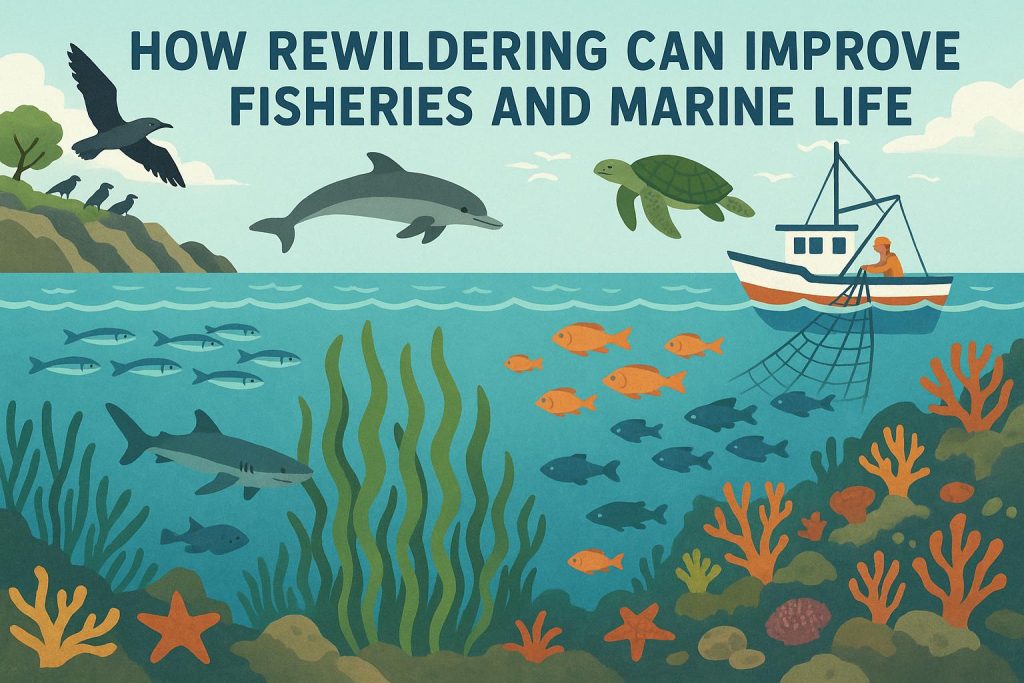
How Rewildering Can Improve Fisheries and Marine Life
The Concept of Rewildering
Rewildering, often interchangeably referred to as rewilding, represents an innovative approach in the field of ecological restoration. This practice primarily seeks to restore ecosystems to their original, untamed conditions, prior to extensive human interference. By reintroducing native species and carefully managing existing plant and animal communities, rewildering strives to reestablish the natural processes that sustain healthy ecosystems. In marine environments, this practice is particularly significant, offering profound benefits like revitalizing habitats, bolstering fishing stocks, and enhancing overall biodiversity.
The Impact on Marine Ecosystems
Marine rewildering plays a pivotal role in restoring the vitality and functionality of ocean ecosystems. The underlying principle is to establish environments where marine life can flourish, thereby enhancing their ability to regenerate important fish stocks and improve biodiversity. Undertaking these initiatives involves significant efforts, such as the strategic reintroduction of key species, which act as catalysts for balancing marine food chains and rejuvenating ecosystem health.
Improving Fish Populations
One of the most compelling advantages of marine rewildering is its potential to boost fish populations. Fish are cornerstones of marine ecosystems, contributing both to ecological stability and providing essential resources for human nutrition. Enhanced habitat quality, achieved through rewildering, allows native fish species to reproduce more efficiently. This ultimately results in the replenishment and sustainable increase in fish stocks, crucially important given that these stocks are often seriously depleted by overfishing and environmental degradation. With regulated and protected spaces dedicated to fostering the regeneration of marine life, these efforts promise significant long-term benefits.
Restoration of Habitats
Healthy, functioning habitats are indispensable components for the survival and prosperity of marine organisms across all trophic levels. The very essence of rewildering pertains to the recovery of critical habitats such as coral reefs, seagrass beds, and mangroves. These environments are crucial as they offer shelter, breeding grounds, and nutrient-rich feeding areas for a multitude of marine species. The removal of pollutants, coupled with the establishment of marine protected areas, can significantly contribute to the restoration of these habitats. As these marine areas regain their lost vitality, they become robust ecosystems capable of supporting diverse communities of aquatic organisms.
Benefits to Fisheries
For fisheries, rewildering initiatives bear tangible benefits. By stabilizing and rejuvenating ecosystems, these efforts lay the groundwork for sustainable fish populations. Resilient ecosystems can support more robust fish stocks, which, in turn, translates to a stable and dependable resource for commercial fishing activities. Furthermore, it ensures that local fishing communities are supported with a constant and reliable source of food and income. The sustained regeneration of fish populations not only aids in the replenishment of commercially valuable species but also significantly supports the socio-economic fabric reliant on fisheries. More insights and scientific explorations of similar projects can be explored on platforms like the Marine Conservation Institute.
Challenges and Considerations
Despite the promising outlook that marine rewildering offers, several challenges must be meticulously navigated to achieve success. One primary challenge revolves around the coordination of a wide array of stakeholders. For rewildering projects to be fruitfully implemented, it is imperative to bring together diverse interest groups, including environmentalists, policymakers, marine biologists, and local communities, ensuring they work collectively toward shared objectives.
Additionally, managing human activities such as shipping routes, tourism, and industrial operations is crucial to prevent any adverse impact on rewildering efforts. Implementing strategies to minimize these activities’ ecological footprints remains a priority. Another significant consideration involves securing adequate financial resources to sustain these projects over the long haul. The complexity of marine ecosystems further necessitates a nuanced understanding to ensure that rewildering efforts do not inadvertently disrupt native biodiversity or lead to unintended environmental consequences.
Conclusion
Marine rewildering offers a noteworthy pathway toward the restoration and securement of oceanic health and vitality. The importance of these initiatives cannot be underestimated as they promise improvements both in ecological functioning – through enhanced fish populations and habitat restoration – and in economic outcomes, particularly for fisheries that depend on sustainable fish stocks. As efforts continue to refine the methodologies and strategies associated with rewildering, the long-term impact of these ecological endeavors offers hope for nurturing healthier marine environments for future generations.
In essence, marine rewildering embodies a paradigm shift in how we perceive and engage with our natural world. It calls for a commitment to restoring and safeguarding the inherent processes and relationships that underpin marine ecosystems. By championing such initiatives, we are called to not only address the deleterious impacts of past exploitations but also forge a more harmonious coexistence with our planet’s precious marine resources.