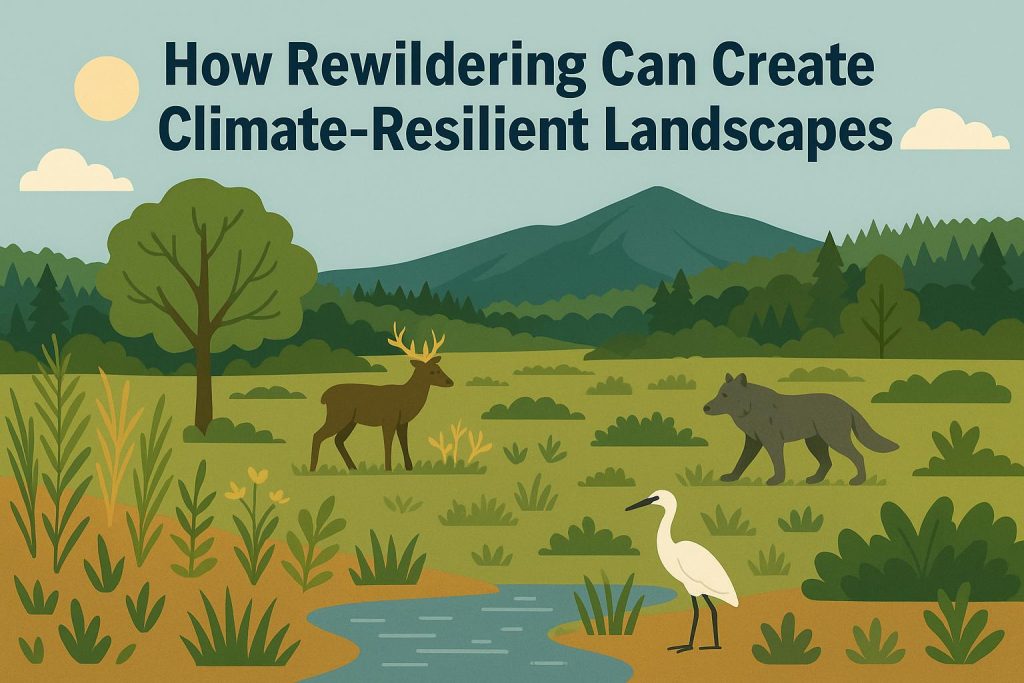
How Rewildering Can Create Climate-Resilient Landscapes
Understanding Rewildering
Rewildering, also commonly known as rewilding, constitutes an innovative approach in the realm of environmental conservation. It primarily focuses on restoring natural processes and the essence of wilderness in various ecosystem landscapes. The primary aim here is to allow landscapes to recalibrate to a state where they no longer need human intervention to maintain balance, permitting nature to thrive in its organic form. The essence of rewildering is grounded in the belief that ecosystems, once they’ve achieved equilibrium, can naturally support both wildlife and human necessities without external interference.
The Principles of Rewildering
Delving deeper into the fundamentals, rewildering seeks to reinstate the natural dynamics inherent in ecosystems. This could involve a multitude of practices like reintroducing indigenous species, dismantling human-made obstructions, or halting activities that disrupt natural processes. This form of ecological restoration makes use of the complex interrelationships present within ecosystems to forge landscapes that are more resilient to environmental stresses and changes.
Creating Climate-Resilient Landscapes
One of the indispensable aspects of rewildering is its potential role in combating the adverse impacts of climate change, which have become increasingly apparent across the globe. Shifting temperature scales, changes in rainfall distribution, and repetitive, extreme weather phenomena have not only endangered biodiversity but also compromised the ability of natural systems to provide crucial ecosystem services. In this context, rewildering emerges as a viable solution, promoting a natural adaptation of ecosystems to these climatic alterations.
Enhancing Biodiversity
An increased diversity of life forms, both flora and fauna, is one of the pivotal outcomes of rewildering endeavors. Restoring species that have been eradicated or significantly reduced in number can reinstigate the functional diversity of ecosystems. For instance, the reintroduction of predator species can establish a natural control over herbivore populations, thus averting overgrazing scenarios and encouraging robust vegetation growth. Such equilibrated conditions foster environments capable of enduring and recovering from climate-induced perturbations, enhancing their long-term viability.
Natural Carbon Sequestration
Amidst the pressing need to tackle climate change, natural landscapes hold a critical function in the sequestration of carbon, directly impacting the global carbon cycle. Ecosystems such as forests, peatlands, and other natural territories play a significant role in storing carbon within their plant matter and soil layers. Rewildering has been shown to augment these processes, thereby aiding in the reduction of atmospheric carbon concentrations, an essential component in the battle against climate change.
Implementing Rewildering Projects
The deployment of rewildering projects is far from a straightforward task and demands meticulous planning, thorough stakeholder engagement, and consistent long-term monitoring to ensure efficacy. These initiatives often commence with smaller-scale trials, serving as pilot studies before escalating to encompass larger landscapes. Integral to the success of such projects is the active participation of local communities, ensuring that social and economic advantages of rewildering are tangible and equitable.
Key Considerations
Implementing rewildering practices effectively hinges on several key factors:
– Community Involvement: The engagement of local populations can be instrumental, offering them significant roles in restoration tasks and involving them in the decision-making stages of the projects.
– Adaptive Management: Ecosystems are inherently dynamic, and continuous monitoring coupled with flexible, adaptive management strategies help tackle unforeseen challenges and variations in ecosystem dynamics.
– Policy Support: The formulation and facilitation of effective policies and legal frameworks are critical for the advancement of rewildering initiatives, often necessitating alignment with broader conservation goals at both regional and national levels.
Future Perspectives
Rewildering stands as a forward-thinking approach to managing landscapes, with the potential to address some of the pivotal challenges posed by climate change. By bolstering the natural resilience of ecosystems, this approach paves the way for ecological renewal while fostering sustainable development. The scientific community, alongside policymakers, is actively investigating the broader implications and potential of rewildering, aiming for an envisioned future where human demands and ecosystem integrity can coexist harmoniously.
For more in-depth information on environmental conservation efforts, readers may find it beneficial to explore resources such as Conservation International or the International Union for Conservation of Nature websites. These platforms provide a wealth of information for those interested in learning more about the sustainable management of natural resources and efforts to preserve and restore biodiversity.