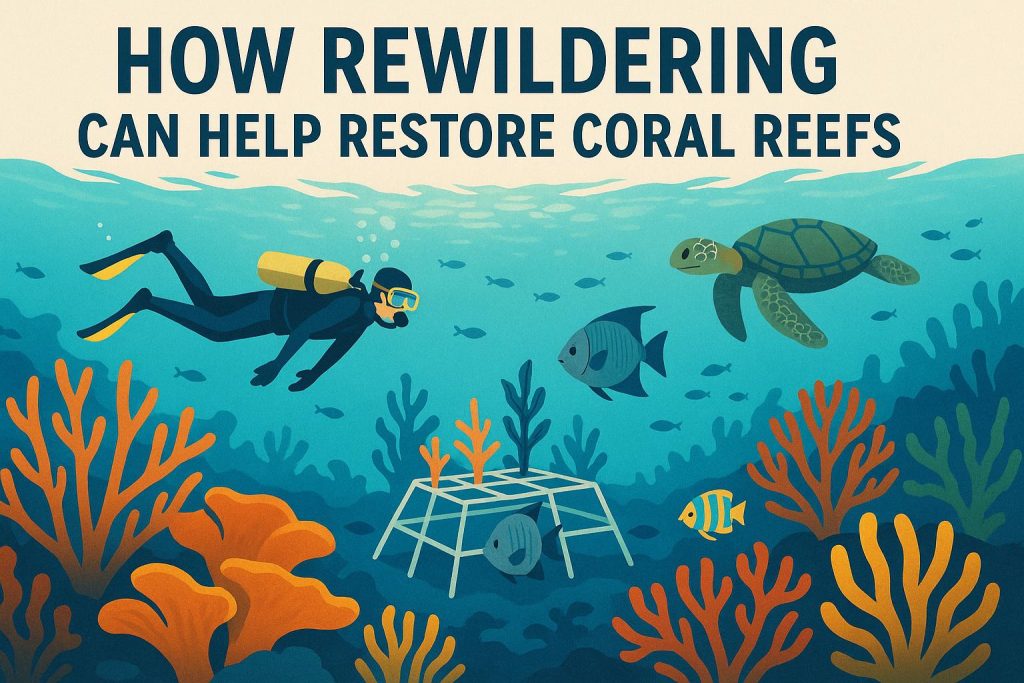
How Rewildering Can Help Restore Coral Reefs
Understanding Rewildering
Rewildering represents a shift in conservation strategy, focusing on the restoration of ecosystems to their natural, self-sustaining states. It emphasizes the natural processes and the reintroduction of native species as opposed to the traditional hands-on management approach seen in conventional conservation techniques. This method of ecosystem management has particularly gained traction on land within forest and grassland ecosystems, marked by the introduction of native plant species and keystone animals that drive ecological processes. However, the concept is not just confined to terrestrial applications. Recently, its principles are increasingly being applied to marine environments, notably as a method for enhancing the health and resilience of coral reefs.
The State of Coral Reefs
Coral reefs stand as the cornerstone of marine biodiversity, often described as the rainforests of the sea, housing roughly a quarter of all known marine species. These diverse ecosystems are vital since they provide habitat and food for a plethora of marine organisms, act as natural breakwaters reducing wave energy, and support the economies of many coastal communities through tourism and fisheries. Nevertheless, coral reefs are facing unprecedented threats, with climate change leading the charge alongside pollution and overfishing.
The phenomenon of coral bleaching, primarily induced by rising sea temperatures, has resulted in substantial losses in live coral cover. This bleaching process weakens corals by expelling the symbiotic algae living in their tissues, which provide them with energy through photosynthesis. Without these algae, the corals are deprived of essential nutrients, becoming increasingly susceptible to disease. Consequently, efforts to restore coral reefs and fortify them against such existential threats have ascended to a critical position in the global conservation agenda.
Applying Rewildering to Coral Reefs
In the context of marine environments, rewildering involves establishing a framework that enables coral reefs to regenerate autonomously. This approach requires addressing and mitigating human-induced stressors that stymie reef recovery while facilitating the rekindling of ecological dynamics that promote sustainable coral ecosystems.
Fish Population Restoration: A pivotal aspect of coral reef rewildering focuses on the reintroduction and conservation of fish populations that contribute immensely to the ecological equilibrium within coral ecosystems. Fish, especially herbivorous varieties, hold a significant role by regulating algal populations that otherwise compete aggressively with corals for space and resources. A viable strategy to bolster fish populations involves creating marine protected areas (MPAs). These designated zones provide a sanctuary where fish can reproduce and mature absent the pressures of fishing, enhancing their abundance and diversity within the reef ecosystem.
Reduction of Local Stressors: Another integral component of rewildering involves mitigating local sources of pollution such as coastal runoff containing agricultural fertilizers, industrial waste, or untreated sewage. Such pollutants exacerbate the deterioration of coral reef health by providing nutrients that spur algal overgrowth or introducing harmful pathogens. Furthermore, managing invasive species that imperil coral survival is essential to restoring and maintaining a stable, thriving reef environment. Promoting the use of eco-friendly practices and infrastructural development along coastal regions can help mitigate these impacts, creating a safer, cleaner habitat for corals to flourish.
Research and Monitoring
The successful deployment of rewildering initiatives hinges critically on rigorous research and consistent monitoring. Understanding the intricate patterns of coral reef health, biodiversity, and the complex interplay of ecological dynamics enables scientists to tailor and refine restoration strategies effectively. Advanced technologies such as 3D mapping provide invaluable insights into the structural complexity of reefs and facilitate precise assessments of coral cover and health.
Genetic studies have also emerged as a powerful tool in the realm of restoration. By analyzing the genetic makeup of coral populations, researchers can identify strains resilient to adverse conditions, such as warm temperatures or acidifying oceans, which could be prioritized in restoration efforts. This evidence-driven approach ensures that resources are allocated efficiently and that the interventions applied are aligned with the current ecological needs and potential future challenges faced by coral reefs.
The Future of Coral Reefs
As the impacts of climate change become ever more pronounced, the need for innovative conservation measures like rewildering becomes increasingly critical. By emphasizing ecosystem-based strategies and reducing anthropogenic pressures, rewildering presents a promising avenue for the restoration of coral reefs. It champions a holistic view of conservation, integrating scientific research, policy-making, and community involvement to foster healthy marine ecosystems.
With international collaboration and dedicated efforts towards policy alignment, particularly regarding carbon emissions reductions and sustainable fisheries management, the outlook for coral reefs can be markedly improved. Community engagement plays a pivotal role in ensuring long-term sustainability. By fostering a sense of stewardship among local communities and stakeholders, support for conservation measures can be bolstered, ensuring that the measures implemented are respected and upheld over time.
In conclusion, rewildering, through its alignment with nature’s intrinsic processes, presents itself as not just a strategy, but a hopeful pathway to reinvigorate coral ecosystems. The potential recovery of coral reefs under its framework could have profound benefits for marine biodiversity and provide substantial socio-economic advantages to coastal communities worldwide. By merging traditional knowledge with modern scientific insights, the restoration and preservation of these vital marine ecosystems can be realized, providing resilience against future environmental shocks and sustaining the ecological balance essential for life in our oceans.