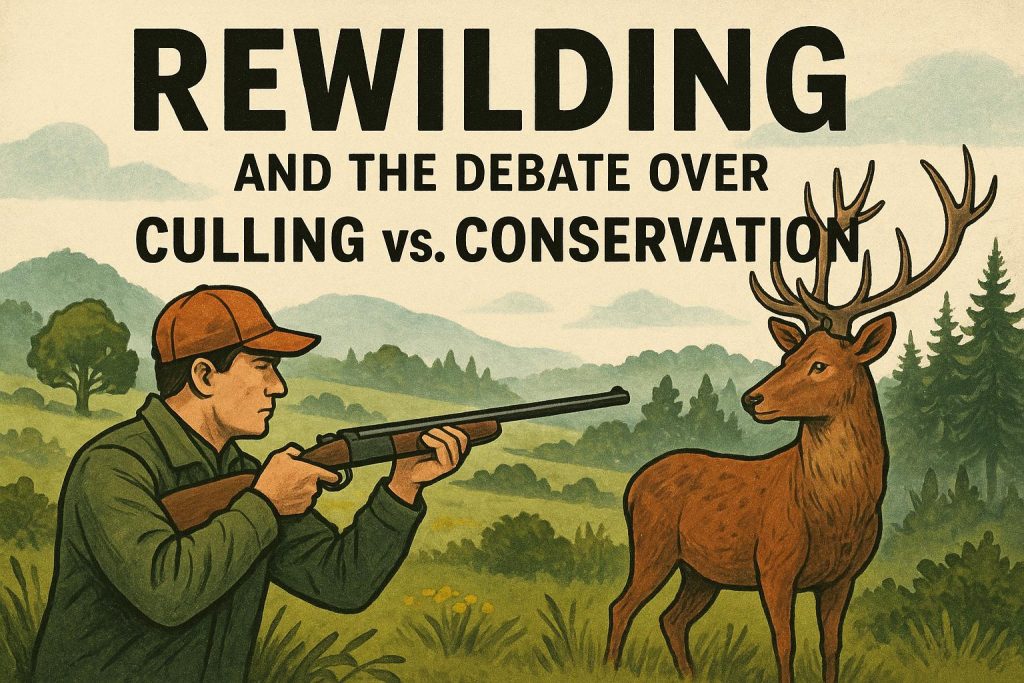
Rewildering and the Debate Over Culling vs. Conservation
Introduction to Rewildering
Rewildering, also known to some as rewilding, represents a progressive environmental strategy aimed at restoring ecosystems to their most organic, uncultivated states. This involves renouncing intensive human management in favor of allowing natural processes to re-establish themselves, often complemented by the reintroduction of keystone species that have either been driven to local extinction or have become significantly diminished in numbers due to anthropogenic influences. Essentially, the essence of rewildering is to develop self-sustaining ecosystems that thrive with minimal human interference.
Culling vs. Conservation: The Debate
A significant debate in the sphere of rewildering broadly revolves around the strategies of culling versus conservation. These conversations are central to shaping the practices and philosophies of current environmental management.
The Case for Culling
Advocates for culling underline its necessity in circumstances where certain species populations have burgeoned uncontrollably. Such overpopulation disrupts habitat integrity, subsequently impinging on biodiversity negatively. Culling proponents perceive this as a method to sustain an equitable ecosystem, ensuring that the allocation of resources such as nourishment and habitat is adequate for various species.
Examples of Culling
Culling methods are frequently adopted in contexts where species such as deer or invasive plant types lack natural predators. The controlled reduction of these populations can be vital in restoring ecological parity. To illustrate, in several areas, deer populations undergo culling to mitigate the excessive grazing that threatens woodland ecosystems, preserving the integrity of these natural landscapes.
The Case for Conservation
Conversely, those who champion conservation emphasize the need to safeguard all species, including potentially overpopulated ones. They contend that human-directed interventions like culling could disrupt inherent natural processes. Instead, the focus should lie in fostering environments wherein nature can autonomously regulate populations through mechanisms such as predation.
Reintroduction of Predators
A pivotal component of conservation includes the re-establishment of natural predators back into ecosystems. An exemplary case involves the reintroduction of wolves into select locations to naturally manage and control deer populations, obviating the requirement for human-led culling measures.
Impact on Biodiversity
The decision between culling and conservation holds a profound influence over biodiversity. An appropriately balanced approach encourages both species preservation and the health of ecosystems. The use of data-driven strategies, guided through scientific inquiry, is indispensable to discern the most viable approach for specific ecosystems.
Scientific Research and Data
Determinations concerning culling and conservation should be grounded in robust scientific research. Investigative endeavors that consider population densities, availability of resources, and the overall health of ecosystems furnish critical insights into whether culling or conservation techniques would most favor long-term ecological stability.
Adaptive Management Strategies
Implementing adaptive management strategies promotes a flexible framework for decision-making. This methodology necessitates the constant reevaluation of strategies in light of the latest scientific discoveries and monitoring outcomes, thereby ensuring that the chosen course of action remains effective and beneficial in the long term.
Conclusion
The discussion surrounding culling versus conservation within the realm of rewildering underscores the nuanced complexities inherent in managing our environments. Both methodologies present distinct advantages, necessitating a choice founded on comprehensive scientific investigation. Given the dynamic nature of ecosystems, continuous surveillance and the application of adaptive strategies remain pivotal to fostering ecological equilibrium and biodiversity. For those desiring more extensive insights into rewildering methodologies, further exploration of supplemental resources and ecological research case studies is advisable.