How Rewildering Can Reduce Urban Heat Islands
Understanding Urban Heat Islands
Urban Heat Islands (UHIs) are geographical phenomena where certain sections of a city or metropolitan area display higher temperatures than their rural counterparts. This temperature disparity is predominantly driven by human activities and the extensive transformation of land surfaces. In urban areas, buildings, roads, and various infrastructures take the place of open land and vegetation, leading to an increased capacity to absorb and retain heat. Understanding the intricacies of urban heat islands is essential for shaping urban policies and environmental strategies, especially as urbanization continues to expand.
The Impact of Urbanization
Urbanization significantly contributes to the UHI effect, as increased infrastructure development leads to more heat absorption. Most urban surfaces, composed of concrete, asphalt, and metal, are excellent absorbers of sunlight during the day, and they retain this heat into the night. This continuous cycle of heat absorption and retention results in city’s ambient temperatures remaining high, even after sunset.
The consequences of urban heat islands are manifold, including a surge in energy consumption, primarily due to heightened dependency on air conditioning systems. This, in turn, amplifies the emissions of air pollutants and greenhouse gases, as energy generation for cooling purposes chiefly relies on fossil fuels. Additionally, UHIs pose significant health risks. Higher temperatures can exacerbate asthma and other respiratory conditions, cardiovascular problems, and heat-related illnesses. Vulnerable populations, such as the elderly and children, are at a substantially higher risk.
The environmental repercussions extend to water bodies as well. The increase in temperature variations can negatively influence water quality, with warm runoff from heated urban surfaces flowing into rivers, lakes, and coastal waters, thereby disrupting aquatic ecosystems.
The Concept of Rewildering
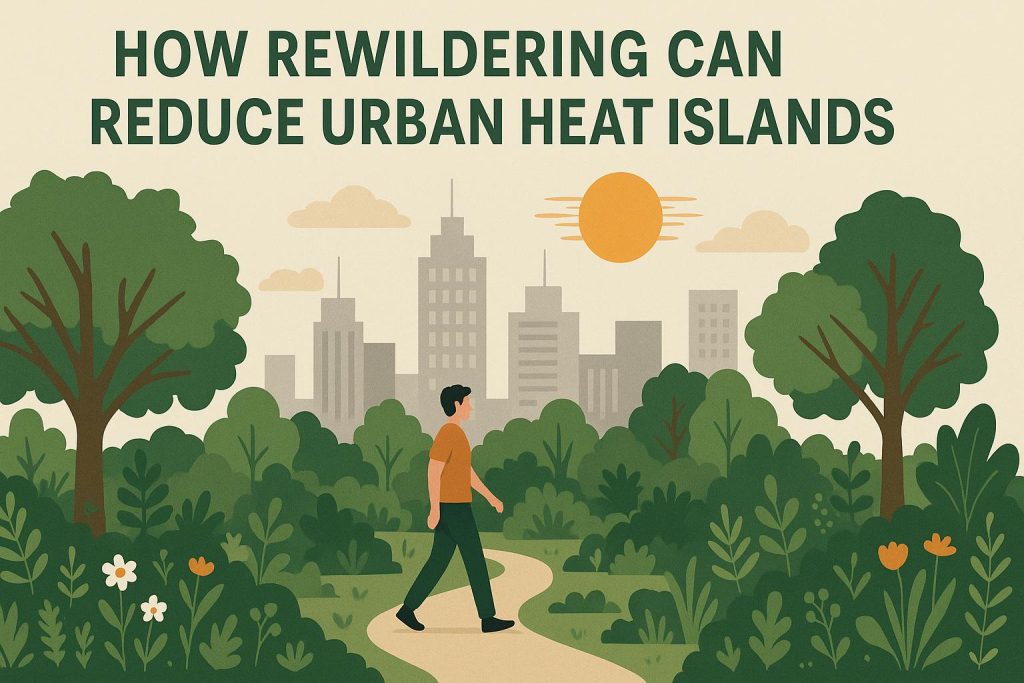
Rewildering emerges as an innovative strategy to counteract the UHI effect. Also known as rewilding, this approach aims to restore natural processes and wilderness areas in urban settings. By reintroducing native vegetation and orchestrating the growth of green spaces, rewildering endeavors to reinstate the natural balance within the built environment.
Distinguishing itself from basic greening strategies that might involve merely planting trees or shrubs, rewildering emphasizes creating self-sustaining ecosystems that can mature and adapt over time. This holistic approach not only targets aesthetic enhancement but seeks to forge robust biodiversity, ecological resilience, and climate adaptability.
Benefits of Rewildering in Urban Areas
Temperature Regulation: One of the principal advantages of rewildering is its capacity to control local temperatures through shade provision and increased evapotranspiration. Vegetation absorbs sunlight, which it uses to convert water within leaves into vapor, consequently cooling the surrounding environment. Through this natural cooling effect, urban areas can experience a reduction in overall temperatures, consequently diminishing the UHI effect.
Improved Air Quality: Urban greenery plays a crucial role in filtering air pollutants and trapping dust particles. The presence of dense vegetation not only absorbs carbon dioxide but also elevates oxygen levels, which can vastly improve air quality in densely populated urban settings.
Biodiversity Enhancement: The introduction of native plant species propagates the return of various animal species, fostering an increase in urban biodiversity. Such ecosystems exhibit greater resilience, easily adapting to changes and challenges, thus ensuring sustainability.
Water Management: Natural vegetation enhances soil permeability, improving water infiltration and reducing surface runoff. This contributes significantly to flood management and promotes groundwater recharge, essential for sustainable urban water cycles.
Implementing Rewildering Initiatives
To fully harness the potential of rewildering, urban planners and environmental agencies must have a detailed comprehension of local ecosystems. Successful rewildering projects demand a collaborative approach that involves community participation, alongside the expertise of ecologists and landscape designers. Community involvement is pivotal, as it ensures that the initiatives garner necessary public support, leading to their long-term success. Planners and project managers should prioritize engaging with local residents, understanding their needs, and incorporating their insights to design initiatives that are both ecologically and socially harmonious.
Besides, selecting the right plant species and understanding their interactions with local wildlife is essential. Ecologists must evaluate the ecological suitability of plants to ensure they support local fauna and contribute to creating robust ecosystems.
Case Studies and Further Reading
For those interested in exploring the groundbreaking impact of rewildering in urban contexts worldwide, several case studies provide valuable insight into best practices and successful strategies. By examining these examples, urban areas contemplating rewildering initiatives can identify valuable lessons and strategies tailored to their unique contexts.
The progressive adoption of rewildering offers a promising pathway to mitigate the urban heat island effect and foster eco-friendly urban ecosystems. As cities continue to expand, integrating nature-based solutions into urban planning and development is increasingly urgent to ensure a balanced, sustainable, and healthy urban future. Emphasizing nature’s role in our built environment not only aids in addressing contemporary challenges but also paves the way for future generations to thrive in harmonious and resilient urban ecosystems.